sin-11/x এর মান হবে-
A. cot^-1(sqrt(x ^ 2 - 1))
B. cot^-1(x/(sqrt(x ^ 2 - 1)))
C. cot^-1(sqrt(1 - x ^ 2))
D. cot^-1(1/(sqrt(1 - x ^ 2)))
qb5উচ্চতর গণিত দ্বিতীয় পত্রবিপরীত ত্রিকোণমিতিক ফাংশন ও ত্রিকোনমিতিক সমীকরনবিপরীত বৃত্তীয় ফাংশনের সূত্রাবলী (Topic Practice)qb5 - ⚡ অনলাইন প্রশ্নব্যাংক দেখুন 💥

সঠিক উত্তরঃ
A.
cot^-1(sqrt(x ^ 2 - 1))
Explanation: 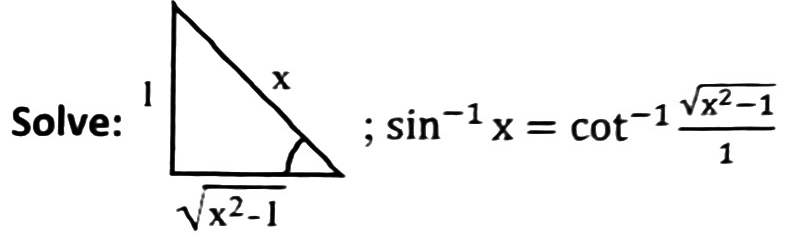
Related Questions (Any University/Year)
- tan-1 2x + tan-13x =π/4 হলে, x =?
- tan-1x + cot-1x = কত?
- tan-1(2x)/(1-x^2) =sin-1(2a)/(1+a^2)+cos^-1(1-b^2)/(1+b^2) সমীকরণে x এর মান হল -
- Evaluate : tan^-1 (m/n) - tan^-1((m-n)/(m+n) .
- sec-1x + cosec-1x = কত?
- sin-1x + sin-1y = π/2 হলে, x√(1-y2) + y√(1-x2) এর মান কত?
- নিচের কোনটি sin(2sin-1x) এর মান?
- 4(cot-13 + Cosec-1√5) =?
- sec^-1"((x+y))/(2sqrt(xy))=?
- tan^-1sqrtx -1/2cos^-1((1-x)/(1+x))=?
- sin^-1(1/(√5))=cos^-1x হলে, x =?
- sin^-1(4/5)+cos^-1(2/sqrt5) সমান-
- (b) যদি sin^(-1)x+sin^(-1)y=pi/2 হয় , তাহলে দেখাও যে x2+y2=1
- tan-12+tan-13+ tan-14 = 0 হলে, tanθ=?
- প্রমাণ কর যে, 2tan^-1{sqrt((a-b)/(a+b))tan(theta/2)}=cos^-1((b+acostheta)/(a+bcostheta))
- tan^-1(1)+tan^-1(2)+tan^-1(3)=?
- tan^-1x + tan^-1y =tan^-1 "(x+y)/(1-xy) সূত্রটি কোন শর্তে বৈধ?
- tan^-1(4/3)+tan^-1(1/2) =?
- cotcos^-1sintan^-1(3/4) এর মান কত?
- tan^-1 এর ডোমেন-